






No more yelling about an egregious strike-three call or a ball four that touched the zone.
Or at least, not as often.
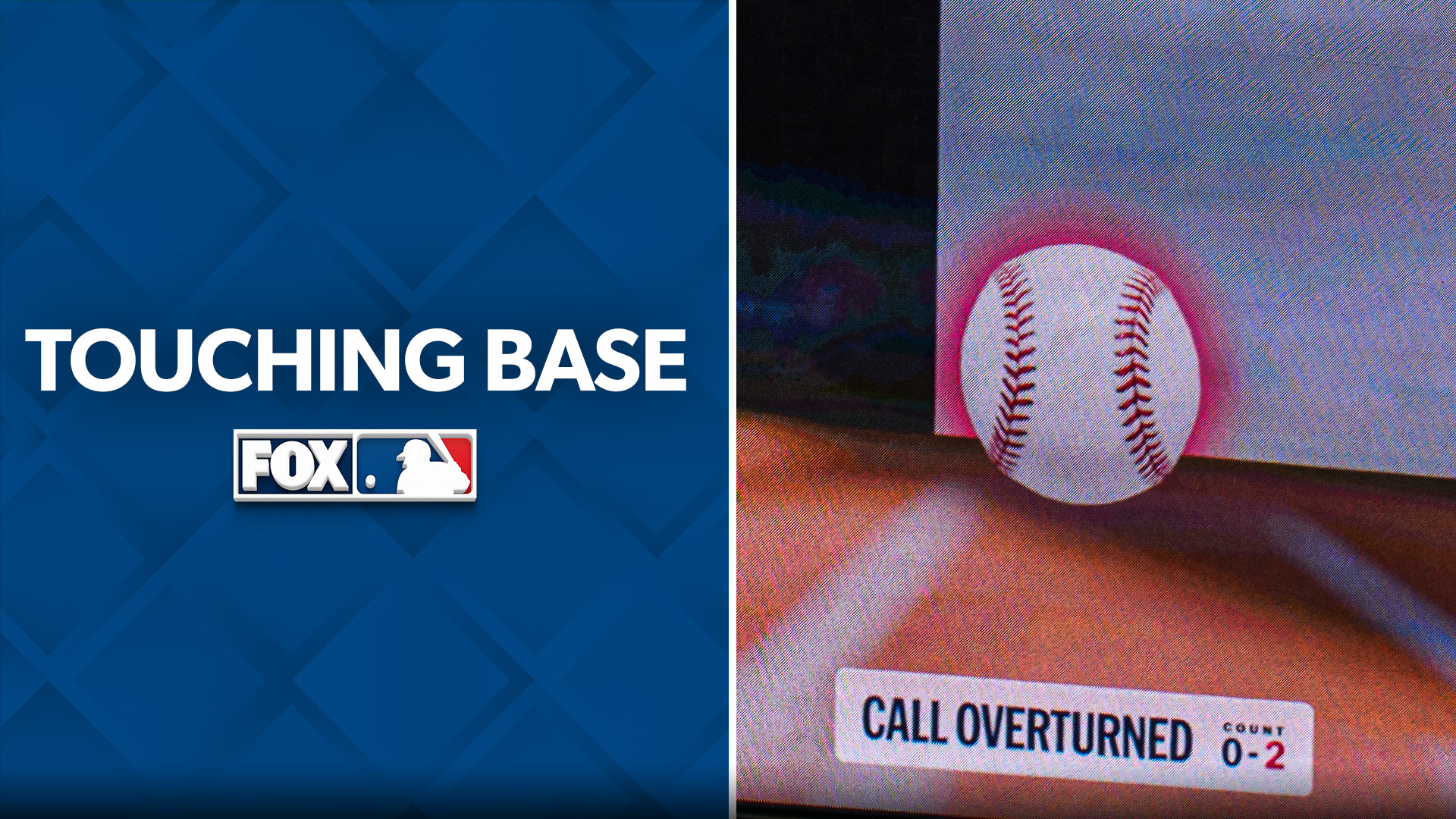
The start of spring training games this weekend also marks the beginning of the automated ball-strike (ABS) challenge system that will be introduced to Major League Baseball for the first time in 2026.

(Photo by Matt Dirksen/Chicago Cubs/Getty Images)
With the new system, which was tested in Triple-A and at spring training games last year, teams will begin each game with two challenges to appeal a ball or strike call. All successful challenges will be retained. Only the pitcher, catcher or batter can challenge, and they can’t receive help from anyone else on the field. A challenge is signaled by tapping at the head (or can be done vocally), and the challenge must be requested immediately (within roughly two seconds) after a call is made.
“We’re going to have a lot of conversations about that, and I do think there’s going to be a strategy with it,” Dodgers manager Dave Roberts told me. “What that looks like, I don’t think I know right now. But we’re going to encourage conversations as far as leverage, when to use it, when not to, who should, who shouldn’t.”
Some teams have already said they prefer their catcher to be the one challenging, given the catcher’s vantage point and understanding of the strike zone (and pitchers’ tendency to get emotional on the mound). Other teams, at least as of last week, were publicly stating that they’re still in the process of figuring out ground rules.
“I think we’ve got ideas, but it’s not set in stone yet,” Padres manager Craig Stammen told me. “I’ll tell you this: It won’t be a free-for-all. We’ll try to be as strategic as we can with it.”

(Photo by Meg McLaughlin / The San Diego Union-Tribune via Getty Images)
The point of the system is not to guarantee 100% accuracy of ball-strike calls but to avoid the awful — and sometimes game-changing — misses.
Before the season, every player will be measured to ensure strike-zone accuracy. The zone is a two-dimensional rectangle set in the middle of the home plate. The edges are set to the width of home plate, and the height is dependent on each individual player’s size (53.5% of the batter’s height at the top and 27% at the bottom). If any part of the ball touches the strike zone, it’s a strike.
One change that fans at home will need to get used to as MLB attempts to avoid any foul play with the new system: The strike-zone box can still remain on television broadcasts but will no longer indicate whether a pitch was a ball or a strike. In addition, there will be a five-second delay on MLB GameDay before registering the location of a pitch. There will also be a delay of a few seconds on the broadcast feed.
MLB’s decision to use the ABS challenge system — rather than no ABS or full ABS — came after years of studying the technology at the minor-league level and polling fans.
The ABS system will make its official debut on Opening Day and continue through the postseason, but for now, teams will get practice with it at every spring-training ballpark.
“It’s going to be interesting, and it’s just going to take reps and take time,” said Mariners catcher Cal Raleigh. “Last year, we got a little taste of it in spring training. To me, it seems like last year the top of the zone was smaller than what it had been in the past, but they’re doing measurements now. … Obviously, you’re going to have to know that stuff, know who’s in the box, tall guy versus short guy, so there’s a lot of factors that go into that.”

(Photo by Ric Tapia/Getty Images)
As Raleigh noted, the ABS strike-zone is not quite as lenient to pitchers as many umpires are at the top (or bottom) of the zone and is expected to slightly reduce strikeout rate and increase walk rate based on testing data. Still, Mariners manager Dan Wilson said he doesn’t anticipate the new challenge system “making a huge wave,” especially in relation to other rule changes in recent years.
“But it’s definitely going to be an interesting twist,” Wilson said. “We’re definitely talking about it. I think the key is educating the players and helping them understand. The toughest part is there’s going to be a lot of emotion involved. That’s the part that’s tough to control.”
Umpires will have the discretion to determine if a challenge was made in a timely manner, if it was prompted by someone other than the pitcher, catcher or hitter or if it had an impact on a play on the bases. When a challenge is made, the home-plate umpire will announce it to the fans, and a graphic will play on the scoreboard and broadcast. The process takes approximately 15 seconds. Per MLB’s study, the overturn rate is around 50%. There are usually about four challenges per game, and the system typically adds about one minute to the time of game.
Before each extra inning, a team will be awarded a challenge if it has none remaining. The number of challenges each team has left will be displayed on the scoreboard.
“I do think there’s a self-evaluation on who knows the strikezone, who doesn’t, who gets emotional, understanding everything,” Roberts said. “So, this will be a good run for us in spring training, and I’m in favor of it.”
Rowan Kavner is an MLB writer for FOX Sports. He previously covered the L.A. Dodgers, LA Clippers and Dallas Cowboys. An LSU grad, Rowan was born in California, grew up in Texas, then moved back to the West Coast in 2014. Follow him on X at @RowanKavner.